

„The first of its kind “
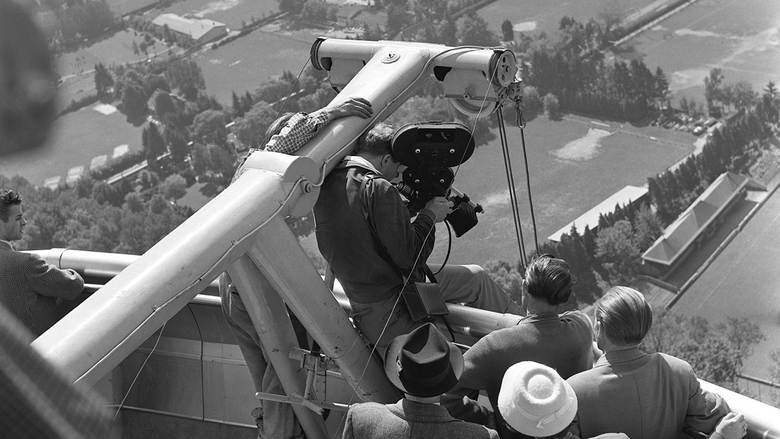
The SWR TV Tower Stuttgart, opened in 1956, is the first of its kind in the world and served as the prototype for countless other TV towers around the world. Considered a masterpiece of aesthetics and architecture, its timeless design remains unrivalled to this day. The Tower’s construction inspired a whole generation of TV towers that have come to define our cityscapes.
The Tower through the ages
Master structural engineer Fritz Leonhardt was a renowned engineer who was best known for his bridge constructions. In many ways, building a tower was a major challenge: would the slender tower be able to withstand any conceivable force? The foundations had to be capable of supporiting the shaft’s 3,000 tons. The elevator and its counterweight were not allowed to destroy the foundations in the event of a fall. Hurricanes and earthquakes had to be taken into account. Wind noise and wind forces had to be considered, as did storm and lightning protection. The Tower’s own oscillation had to be kept to a minimum. Aesthetics always played an important role in all these considerations. Not to mention that the Tower had to serve primarily as a functional building and many people were eagerly awaiting better TV reception.
Leonhardt took particular care when it came to the safety of the Tower. Together with his colleagues, he approximately doubled the wind forces specified in building regulations, ensuring a safety factor of 2.5. The Tower would survive a storm four times more powerful than anything ever recorded in the country without sustaining any damage. It would only fall or tip over under wind forces five to six times greater than that.
Back then, the engineers had neither calculators nor computers to do their calculations, only slide rules. They used rubber bands to visualize tensile and load-bearing forces.
From a risky venture to a landmark
Despite all these precautions, the Tower was still a risk. While Leonhardt was familiar with prestressed concrete from bridge building and housing construction, he lacked experience in building towers. Similarly, no one in Europe had any experience with aluminum cladding. There was also uncertainty as to how wind and weather would affect the construction work.
The fact that the TV Tower went ahead despite all the unknowns of the time is down to a series of bold decisions. Leonhardt, the man behind the idea, got others excited about his vision. The managing directors at Süddeutscher Rundfunk, the region’s public broadcaster, stuck with the project even as costs mounted. They brought on board experienced architect Erwin Heinle. Heinle, the senior construction manager, found a solution for each and every challenge that cropped up during construction. He was also responsible for the interior design and the buildings at the foot of the Tower.
In the mid-1950s, Stuttgart was still scarred by wartime damage and in the midst of a construction boom. Many other buildings were being built at the same time. 1956 didn’t just see the opening of the TV Tower—the new city hall, the Liederhalle concert hall, and the Obertürkheimer Bridge were also completed that same year.
Foundations
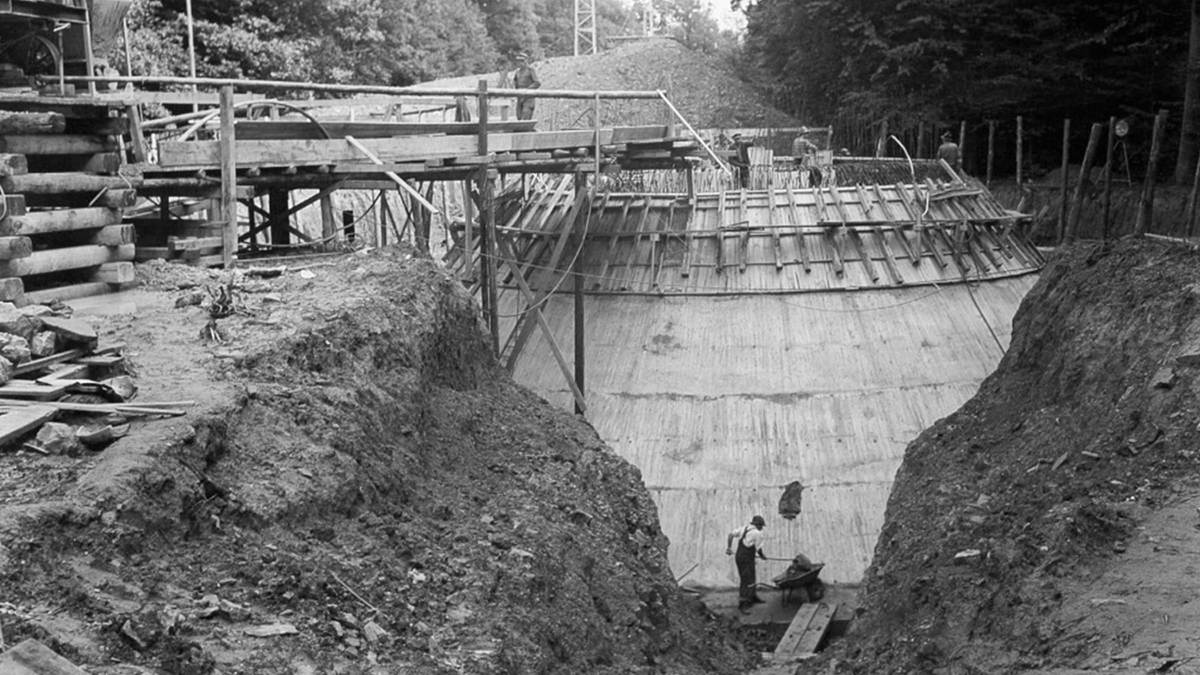
While the foundations for large chimneys were made of heavy solid slabs in the 1950s, Fritz Leonhardt developed a circular foundation with a core width of 27 meters for the TV Tower for the very first time. Having such a wide core reduces swaying significantly. To prevent the circular foundations from breaking under the 4,500-ton load from above, the engineers opted for a radial bundle of strong steel rods. Like the spokes on a bicycle, the rods put the circular foundations under tension and reinforce them. A thin concrete slab protects the steel rods from corrosion by groundwater.

Two conical shells provide stability
A truncated cone shell serves as a transition element from the foundations to the shaft, transferring the loads and wind forces to the ring. Inside the foundations, a second conical shell stands at an angle and, in a sense, “upside down”. This shell connects to the upper edge of the outer shell and its tip is embedded in the base plate in the center to create a very stable spatial framework.
Fritz Leonhardt intended to conceal the wide foundations underground. He did not want the structure’s appearance of lightness to be compromised by a massive base. Such was the case with towers built later, for example in East Berlin and Moscow.
Designer Fritz Leonhardt incorporated numerous safety features into his plans. He later said: “We designed the Tower in Stuttgart with excessive safety margins because we were breaking new ground.”
Tower Shaft
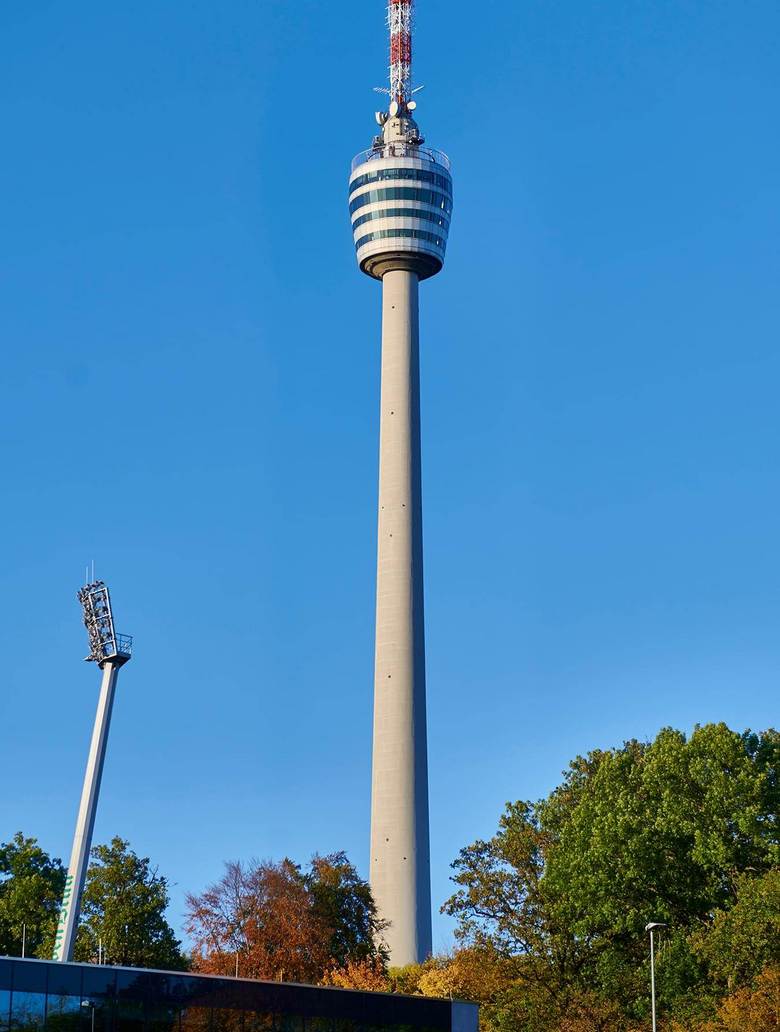
The Tower shaft is a reinforced concrete tube anchored in the foundations. At the base of the Tower, the outer diameter is 10.80 meters, tapering to 5.04 meters at the base of the pod. Even at its narrowest point, there has to be enough space for the two elevators, the emergency staircase, and the cable ducts.
Nature as a Model
The parabolic curve of the shaft is crucial to its light and harmonious appearance. It tapers towards the top, but not in a straight line; instead, it gently curves away from the straight line with a barely perceptible concave swing. Trees don’t grow in a perfectly straight line either. Another detail also draws its inspiration from nature: The relatively thin walls of the concrete tube are reinforced with a cross frame every ten meters. It’s the same principle that makes bamboo shoots grow so tall.
Oscillations
Wind forces, solar radiation, and cooling can make the Tower shaft oscillate. In severe weather conditions, the shaft can sway up to 30 centimeters from its axis. And the end of the antenna mast can sway as much as 1.50 meters. But that doesn’t make the Tower fall.
Tower pod
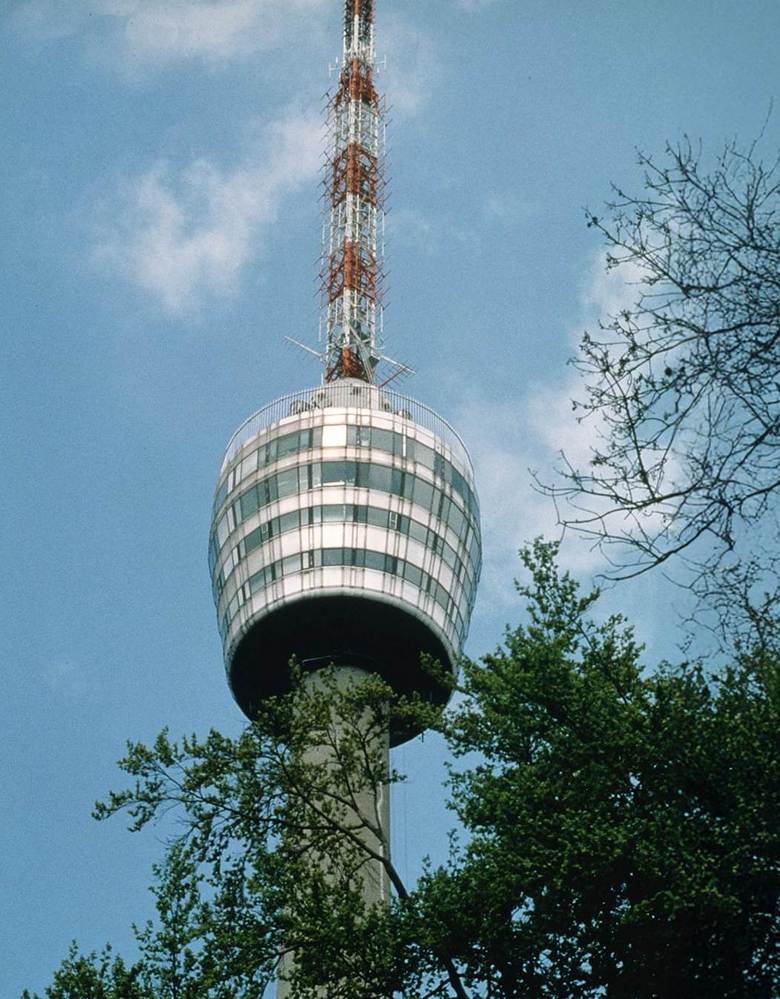
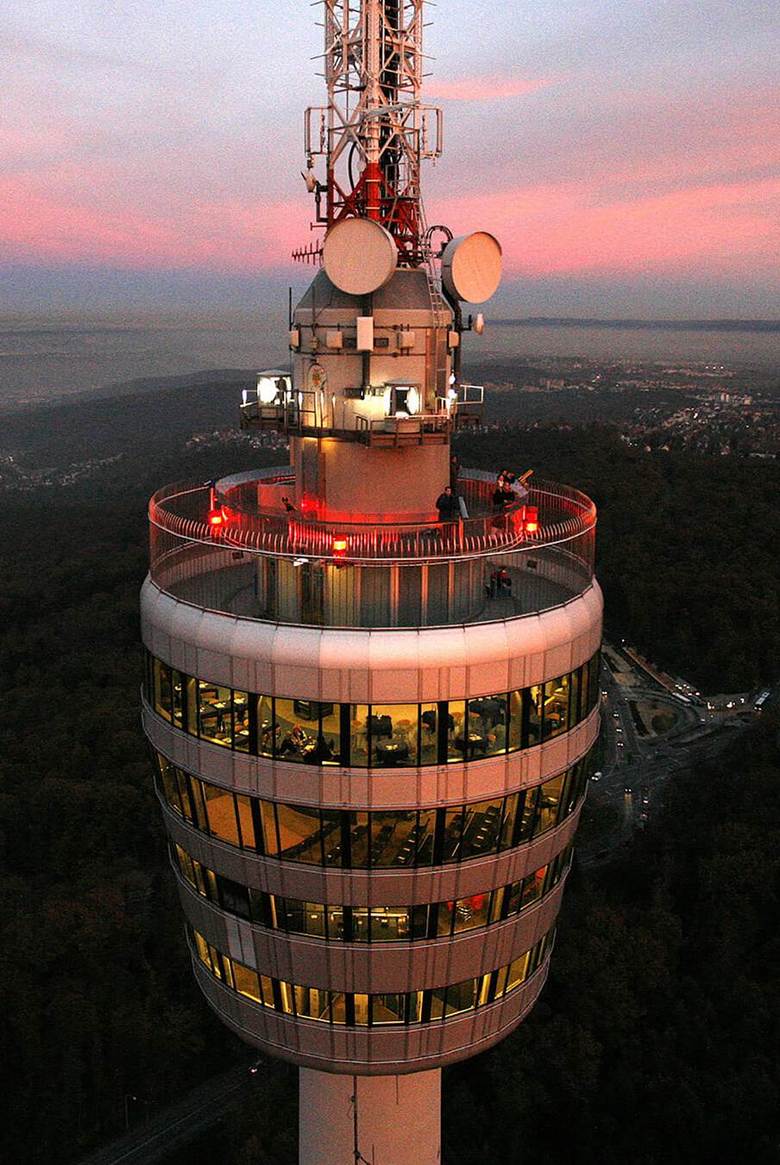
The basic shape of the pod was decided: a circular-cylindrical shape offers the least wind resistance. To improve airflow, the edges at the top and bottom of the pod are significantly rounded. There are two other advantages to this tapered shape: It protects visitors from unpleasant wind noise and means they can’t see straight down from the viewing platform.
To make this structure appear light despite its actual weight, the outer skin is clad in smooth aluminum sheet metal. As a result, the SWR TV Tower is as streamlined as an airplane. Even storms cannot harm it. A hurricane with winds reaching 170 kilometers (about 105 miles) per hour generates wind forces of 172 tons against the Tower. Compared to the Tower’s total weight of 4,500 tons and the ground pressure of 3,000 tons on the foundations, 172 tons is so insignificant that it poses no danger.
Bottom floor: technical facilities
The Tower’s pod has four floors. The bottom floor, at a height of 138 meters, is dedicated to technical facilities. Until 1974, this is where the television transmitters were operated. The third generation of television transmitters was then moved to the operations building at the foot of the Tower. New low-loss high-frequency cables that could cover the long distance to the antenna made this relocation possible. Today, the building’s technical systems, a variety of microwave radio links, mobile phone equipment, and police transmission equipment are accommodated on the former technical floor.
Upper floors: guest accommodation
The two top floors were planned as guest rooms from the outset, because operating a tower restaurant is only profitable on a certain scale. The kitchen was located on the floor below. After the Tower’s exterior was renovated in 2005, the kitchen remained unfinished and the former restaurant space was converted into a venue for all kinds of events. Today, the Panorama Café is on the top floor.
Viewing platforms
A two-story viewing platform is located at a height of 150 meters. The second floor was built especially for children, so that they could enjoy the view without being obstructed by the 1.20-meter-high parapet on the lower platform.
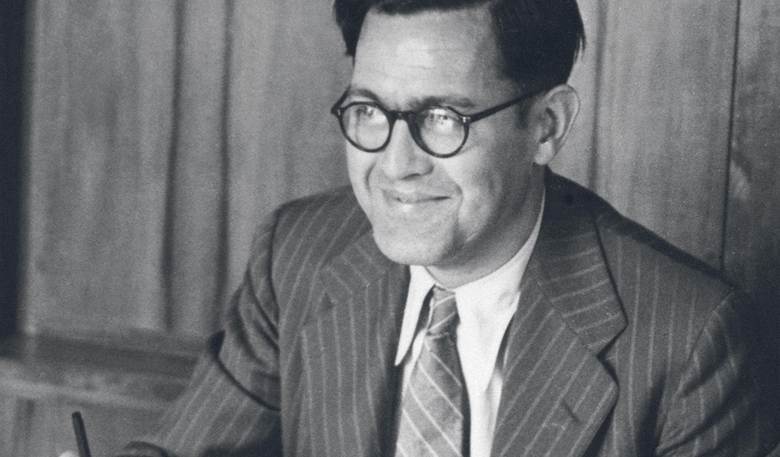
Master Structural Engineer and Designer of the Stuttgart TV Tower
Fritz Leonhardt is the creator, designer, and constructor of the Stuttgart TV Tower. You could also call him “the master builder”, even though his actual job title was that of civil engineer. Leonhardt was never satisfied with creating purely technical structures; he always wanted to build something aesthetically pleasing as well. He himself said of the TV Tower: “With this structure, we’ve proven once again that it’s possible to create something that’s both technically functional and beautiful, bringing people joy and serving their immediate needs.”
Civil engineers need to see their job as planning, designing, and creating, and consider buildings as a whole. They also need to have at least some sense and understanding of beautiful design. After all, their buildings are an integral part of the built environment.
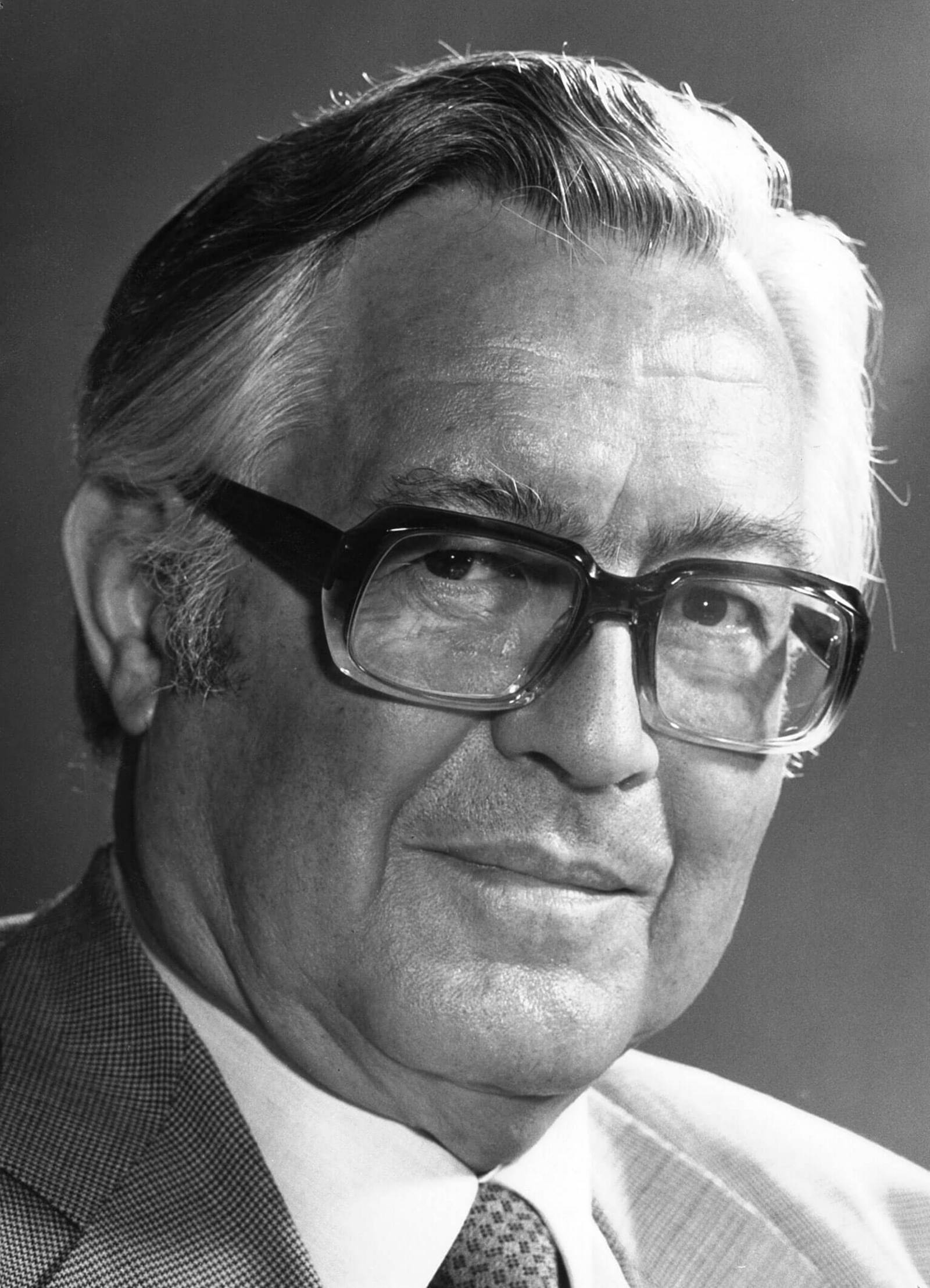
Fritz Leonhardt – wichtigste Lebensdaten
Laid to rest in Stuttgart
President of the University of Stuttgart
Professor of Solid Construction at the University of Stuttgart
Freelance engineer in Munich, Cologne and Stuttgart
Bridge-building engineer for the German Highways Company
Civil-engineering course at the Purdue University in Lafayette (USA)
Civil-engineering course at the technical university of Stuttgart
High-school diploma at the Dillmann-Gymnasium in Stuttgart
born in Stuttgart
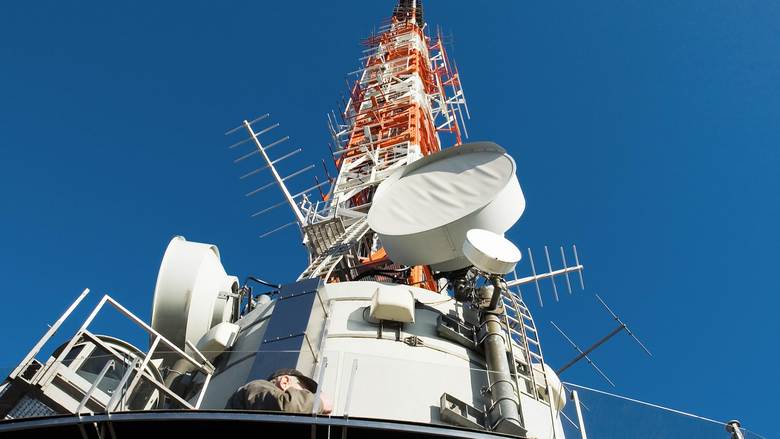
Transmission mast
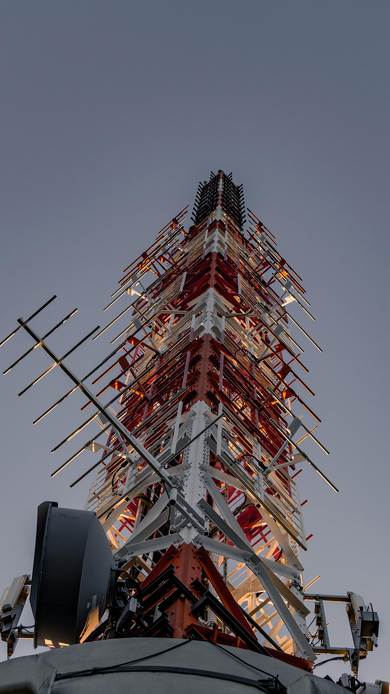
The transmission mast atop the SWR TV Tower in Stuttgart is a riveted, square lattice mast made of angle profiles. The 32-meter-high lower FM section is 1.90 meters wide, while the 19-meter-high upper section is only 1.29 meters wide. The mast weighs 48 tons.
Consistent with international guidelines, the antenna mast is painted bright red and white. This makes it stand out clearly against the dark earth and bright sky and ensures that it is clearly visible to aircraft. In addition, the antenna mast is equipped with red warning lights.
Despite the Tower’s completion in 1955 ensuring good TV reception in the greater Stuttgart area, residents in parts of the city that were out of range continued to complain about poor reception. Therefore, in 1965, Süddeutscher Rundfunk had the steel lattice Tower raised by an additional 6 meters. Since then, the Tower has stood at a height of 217 meters.
Modernization and renovation
1979 to 1983 saw the modernization of the elevator system, energy supply, air conditioning, and kitchen facilities.
Extensive renovation work took place between April and November 2005. Fifty years on, the outer cladding of the Tower pod was in urgent need of an update. This meant that the Tower had to be closed for several months for the first time since its completion.
The TV Tower also underwent extensive technical upgrades. These primarily served to improve the Tower’s safety systems. They included, for example, the installation of a smoke extraction system in 2005. The ventilation, heating, and sprinkler systems have also been replaced several times.
The autumn of 2025 saw the start of a comprehensive restoration and recoating of the reinforced concrete in accordance with conservation requirements in order to repair cracks in the shaft. The Baden-Württemberg Monument Foundation supported the renovation work on this unique cultural monument with a €500,000 grant. The SWR TV Tower is exposed to constant oscillations and movements and is subject to strong environmental influences, not least due to its height and exposed location. Its technical and structural condition is monitored continuously. The engineering firm Leonhardt, Andrä und Partners (LAP) has been commissioned to assess the cracks that have developed over the years and the coating of the exterior, and to carry out extensive preliminary surveys. The choice of coating systems was preceded by a long process of examination with the MPA University of Stuttgart. The color, appearance, and handling of the visible cracks were closely coordinated with the heritage office during the planning process. The great height at which the construction work takes place is particularly challenging. Work must be carried out from platforms and suspended scaffolding, and rope-access technicians have to be employed. In addition, the building materials have to be carefully planned for this height. The work is scheduled to be completed during the anniversary year 2026. The Tower will remain open to the public for the duration of the work.
Television and radio
The SWR TV Tower has been broadcasting radio programs since May 1956. The FM transmission antenna was first installed in 1981 and replaced in 2000 due to damage. Development began on digital broadcasting (Digital Audio Broadcasting, DAB) in 1988. To improve coverage, a high-performance DAB antenna was mounted on the mast in 2000.
The television antennas are currently out of service, as they are no longer suitable for the frequency range used for terrestrial television (DVB-T standard). The steel lattice mast would have required extensive modification. Since July 2006, therefore, Germany’s main television channel, ARD, has been broadcast from the neighboring telecommunications tower rather than the SWR TV Tower.